How to Clean Your Wool Carpet

Contact COIT for a professional cleaning!
Wool carpeting, which can be found as a blend of synthetic and wool or 100% sheep’s fleece, is a popular carpet option due to its naturally soft texture, durability, and insulating properties. Although wool carpeting is often a more expensive option compared to fully synthetic carpeting, many make the investment in consideration of its sound-absorbing, dirt-repelling, and environmentally friendly qualities.
Because wool carpets and rugs are pricier and have specific maintenance requirements, it’s crucial to take proper care of them to promote cleanliness and longevity. In this article, we’ll be covering safe and effective wool carpet cleaning tips so you can keep them in excellent condition for years to come.
Why Wool Carpets Need Special Care
One of the reasons wool carpets are so popular is also what makes them different to clean. Unlike synthetic carpets made from nylon or polyester, wool is a natural protein fiber that shares similarities with human hair.
Wool is also naturally resistant to soiling. According to Godfrey Hirst's wool carpet care guide, wool fibers release soil up to 25% more readily than synthetic carpet fibers, helping dirt stay closer to the surface where it can be removed through routine vacuuming and cleaning.
Wool fibers naturally contain lanolin, which helps repel dirt and liquids, but they are also highly absorbent. In fact, wool can absorb up to approximately 30% of its weight in moisture without feeling wet. While this helps wool regulate humidity and remain comfortable underfoot, it also means spills and excess moisture can become trapped deep within the fibers.
Wool is also sensitive to harsh chemicals, high heat, and excessive agitation. Using the wrong cleaning products or techniques can lead to shrinkage, discoloration, browning, fiber distortion, or permanent damage.
The good news is that with the right care, wool carpets are incredibly durable and can last for decades.
Preparation for Cleaning Wool Carpets
Whether your carpet is a blend of wool and synthetic fibers or 100% wool, you will be able to clean it with the help of wool-friendly products, tools, and routine cleaning.
To set yourself and your wool carpets up for success, you'll want to have a few tools and materials on hand before getting started with cleaning. Keep in mind, wool carpets will need to be treated with wool-friendly cleaning solutions, which are gentler than other chemical solutions.
Always Test for Colorfastness First
Before using any cleaning solution, it's important to test it in an inconspicuous area of your carpet.
- Apply a small amount of cleaning solution to a hidden corner.
- Let it sit for several minutes.
- Press a clean white cloth against the area.
- Check for any dye transfer.
If color transfers onto the cloth, discontinue use and contact a professional carpet cleaner.
Recommended Tools and Materials
To keep up with wool carpet maintenance, it's good to have a few tools and materials on hand for routine cleaning and unexpected spills.
- Vacuum (soft bristles or no beater bar)
- Soft bristle broom or brush
- Wool-friendly cleaning solution
- Sponges and towels
- Baking soda
- Cornstarch
- White distilled vinegar
- WoolSafe-approved cleaning products
General Cleaning Techniques
Wool carpets require a bit more attention than traditional carpets, so understanding and implementing some general cleaning techniques will help ensure your carpets remain fresh. Here are some best practices for wool carpet care:
Routine Vacuuming
Regularly vacuuming your wool carpet is key to maintaining cleanliness, and vacuuming does more than keep your carpet looking clean. According to the National Center for Healthy Housing, a single thorough vacuuming session reduced airborne fine particles by 50%, bringing indoor particle levels down to concentrations similar to outdoor air. Over time, dirt and debris will settle into your carpet's fibers, so to keep up with this and ensure dirt doesn't accumulate, vacuum at least once a week.
When vacuuming wool carpets:
- Use the highest pile setting available.
- Turn off the beater bar if possible.
- Vacuum slowly using overlapping passes.
- Move furniture periodically for a more thorough clean.
If you're planning to deep clean your carpets, you'll first want to perform an initial thorough vacuuming on all carpeted areas to remove the surface layer of dirt and debris.
COIT Pro Tip
Before vacuuming, you can also sweep a soft bristle broom over the carpet to loosen up some of the surface-level dirt and debris.
Contact COIT for a professional cleaning!
Is Wool Carpet Shedding Normal?
If your wool carpet is new, you may notice loose fibers appearing in your vacuum canister or on the carpet's surface. This is completely normal. Wool carpets naturally shed loose fibers during their first several months of use. Regular vacuuming helps remove these fibers and reduce shedding over time.
Use Wool-Friendly Cleaning Solutions
To avoid damaging your wool carpets, you’ll want to use a wool-friendly cleaning solution. Wool-friendly cleaning agents are pH-neutral. Anything above a pH level of 8 can be too aggressive on wool carpet fibers.
COIT Pro Tip
Safe wool carpet cleaning solutions will be labeled with the “WoolSafe Approved” stamp. To remove the guesswork and ensure you don’t damage your carpet, look for bottles of cleaning solutions marked with this specific certification.
5 Mistakes That Can Ruin a Wool Carpet
Even well-intentioned cleaning efforts can damage wool fibers if the wrong methods are used. Here are some of the most common mistakes homeowners make when cleaning wool carpets.
Using Bleach
Bleach is too harsh for natural wool fibers and can cause permanent discoloration, weakening, and damage. Even small amounts can strip the carpet of its natural properties and alter its appearance.
Cleaning With Ammonia-Based Products
Many household cleaners contain ammonia or other high-pH ingredients that are unsuitable for wool. Because wool is a natural protein fiber, alkaline cleaners can break down its structure and shorten its lifespan.
Using Hot Water
Hot water may seem like an effective way to remove dirt and stains, but it can do more harm than good. Excessive heat can cause wool fibers to shrink, distort, or lose their natural texture. Always use cold or lukewarm water when spot cleaning wool carpets.
Scrubbing Stains Aggressively
When a spill occurs, resist the urge to scrub. Vigorous scrubbing can fray wool fibers, create fuzzy patches, and push stains deeper into the carpet. Instead, gently blot the stain with a clean cloth and work from the outside toward the center.
Overwetting the Carpet
Wool can absorb a significant amount of moisture, which means it takes longer to dry than many synthetic carpets. This is one reason overwetting can be problematic. Research from The Woolmark Company found that wool fibers can absorb up to 35% of their weight in moisture before they even feel wet. If too much water is used during cleaning, moisture can remain trapped within the carpet and extend drying times, and increase the risk of mold, mildew, unpleasant odors, and carpet browning. Always use moisture sparingly and ensure the carpet dries completely after cleaning.
Dry Powder Cleaning Method
Wool carpets have a tendency to absorb and retain moisture, which means they need to dry thoroughly after cleaning to prevent mildew, odors, mold, and browning.
One of the best ways to clean wool carpets doesn't involve water at all.
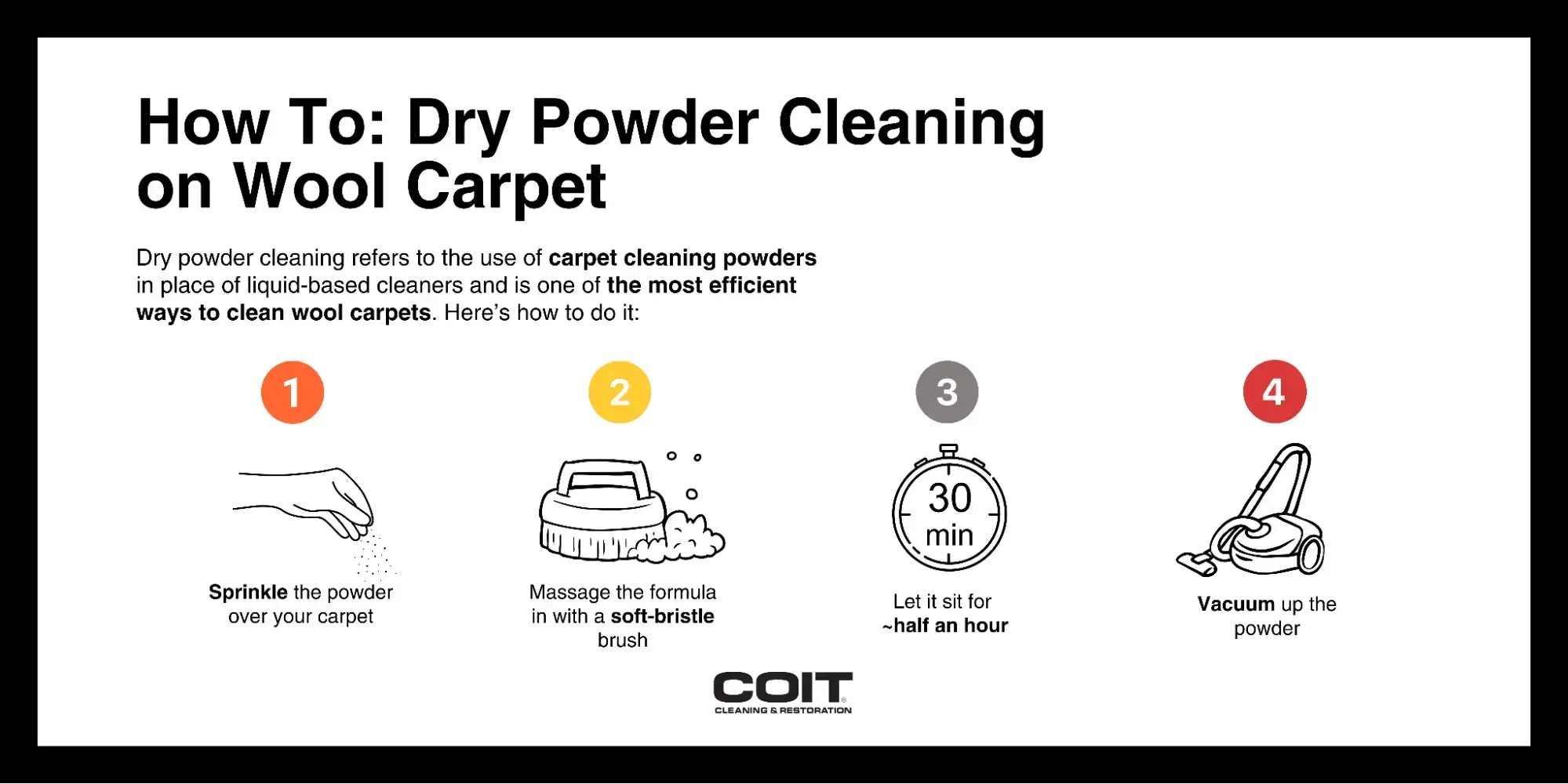
Dry powder cleaning refers to the use of carpet cleaning powders specifically designed for wool carpets. Simply sprinkle the powder over your carpet, massage it in using a soft-bristle brush, allow it to sit for approximately 30 minutes, and then vacuum thoroughly.
Dry powder cleaning solutions can be purchased commercially or made at home using baking soda.
COIT Pro Tip
Don’t apply a dry powder on wet carpets as this will cause the powder to stick and make it difficult to vacuum up.
How to Remove Stains from Wool Carpet
While sound absorption is one of the many benefits of owning wool carpets, they will also absorb spills quickly, which means you’ll have to tend to them in a timely manner before any stains can set. Here’s how to quickly remove some of the most common stains on wool carpets:
Blot, Don't Scrub
One of the most important rules of wool carpet stain removal is blot, don’t scrub. Scrubbing can force stains deeper into the fibers and damage the carpet's structure. Instead, gently blot spills with a clean white cloth and work from the outside of the stain inward.
Wool Carpet Stain Removal Guide
Wine
To remove a wine stain from a wool carpet, start by blotting the spot with a clean white towel. After blotting, pour a bit of cold water on the stain to dilute it. Continue blotting until you can no longer remove any of the stain. Combine and apply a 3 to 1 ratio of water to baking soda to the affected area. Let this dry and then vacuum it up.
Coffee
Blot and absorb as much of the coffee spill as possible with a clean paper towel or cloth. Dilute the stain by applying cold water to the affected area and continue blotting. Mix one-third cup of distilled vinegar with two-thirds cup of water and use a damp sponge to work this mix into the stain. Work in circular motions beginning with the outer edges of the stain. Rinse the area with cold water and use a towel to soak up any remaining liquid.
Pet Urine
To remove pet urine from wool carpets, apply enough cornstarch to the affected area to cover the entire stain. Let the cornstarch sit for around 30 minutes before rinsing the area with water. Put on a pair of protecting gloves and firmly press a cloth or paper towel into the stain to absorb the remaining liquid.
COIT Pro Tip
Visit and save our handy Spot Removal Guide for more tips on how to remove common stains from wool carpets and upholstered furniture. If the home remedies aren’t working, contact COIT for stain removal help.
Commercial Vs. Homemade Wool Carpet Cleaner
When it comes to wool carpet care, there are both homemade and commercially sold stain removers available. While some prefer the ease and convenience of store-bought solutions, you might find yourself in a pinch and need to work with items you likely already own.
DIY wool carpet cleaning solutions are typically made of baking soda, cornstarch, or borax along with mild dishwashing detergent, water, and distilled white vinegar.
Can You Steam Clean a Wool Carpet?
Yes, but caution is required.
Steam cleaning can be effective for wool carpets when performed correctly using wool-safe cleaning products and controlled moisture levels. Excessive heat, harsh chemicals, or over-wetting can damage wool fibers and increase drying times.
Many homeowners choose professional cleaning services because wool requires specialized knowledge and equipment.
Drying and Maintenance
As mentioned, wool carpets are super absorbent. This means when you do use liquid-based cleaners (as opposed to a dry powder cleaning), you’ll want to ensure your carpets are fully dry before walking or placing any furniture items on them.
Wool carpets typically require at least 24 hours to dry fully. Poor drying can lead to mold growth, mildew odors, discoloration, and browning.
To speed up drying:
- Open windows when weather permits.
- Use fans to increase airflow.
- Run a dehumidifier if available.
- Avoid placing furniture back too soon.
Recommended Wool Carpet Cleaning Schedule
Task | Frequency |
Vacuuming | Weekly |
Spot cleaning spills | Immediately |
Deep cleaning | Every 12–18 months |
Furniture rotation | Every 6 months |
Professional inspection | Annually |
Industry standards generally recommend professional cleaning every 12 to 18 months. The Carpet and Rug Institute notes that professional deep cleaning helps remove embedded soil and maintain carpet performance over the long term.
If you plan to use a liquid-based wool-friendly solution, you will want to avoid mold and mildew during this process. Before you begin, consider opening all windows or even renting and installing a few air movers to dry your space faster.
When to Call for a Professional Cleaning Service
While steam cleaning wool carpets is recommended at least once a year, it should be done with caution. Wool carpets require special attention, and using harsh chemicals or the wrong equipment can result in costly damage to your floors. Although you can of course clean wool carpets yourself, it may take some of the stress away if you seek help from the professionals who know how to specifically treat wool carpets.
Signs That a Professional Cleaning is Needed
Sometimes, do-it-yourself efforts can only take us so far. Here are a few telltale signs that your carpet may be needing a professional cleaning:
- No matter how hard you’ve tried, that stubborn stain won’t go away
- There’s a foul smell coming from your carpet
- You’ve never had your carpets deep-cleaned
- You live in a high-occupancy household with a lot of foot traffic (i.e. more dirt is being tracked in)
- You are experiencing allergy symptoms or respiratory issues that may be related to dirty carpets
Benefits of a Professional Wool Carpet Cleaning
Wool carpets can be tricky, but professional carpet cleaners know how to handle a variety of carpet types. While it may seem more cost-efficient to go the DIY cleaning route, you may end up doing more harm than good, which will cost you more money down the line to correct.
Professionals like COIT have the knowledge and the resources to assess your carpet’s exact needs and determine the best plan of action. By hiring professionals, you can ensure the work gets done right—the first time.
Contact COIT to schedule a professional wool carpet cleaning
Frequently Asked Questions
Can you clean a wool carpet with vinegar?
Yes. Distilled white vinegar diluted with water is generally considered safe for wool carpets and is commonly used for spot cleaning.
Can you use baking soda on a wool carpet?
Yes. Baking soda is often used as a dry cleaning agent and deodorizer for wool carpets.
How often should wool carpets be professionally cleaned?
Most wool carpets benefit from professional cleaning every 12 to 18 months, although high-traffic homes may require more frequent service.
Why is my wool carpet shedding?
New wool carpets naturally shed loose fibers. Regular vacuuming helps reduce shedding over time.
What cleaners should never be used on wool carpet?
Avoid bleach, ammonia-based products, high-pH cleaners, and harsh stain removers not specifically approved for wool.
How long does a wool carpet take to dry?
Most wool carpets require approximately 24 hours to dry completely after wet cleaning, depending on humidity, airflow, and cleaning method.


